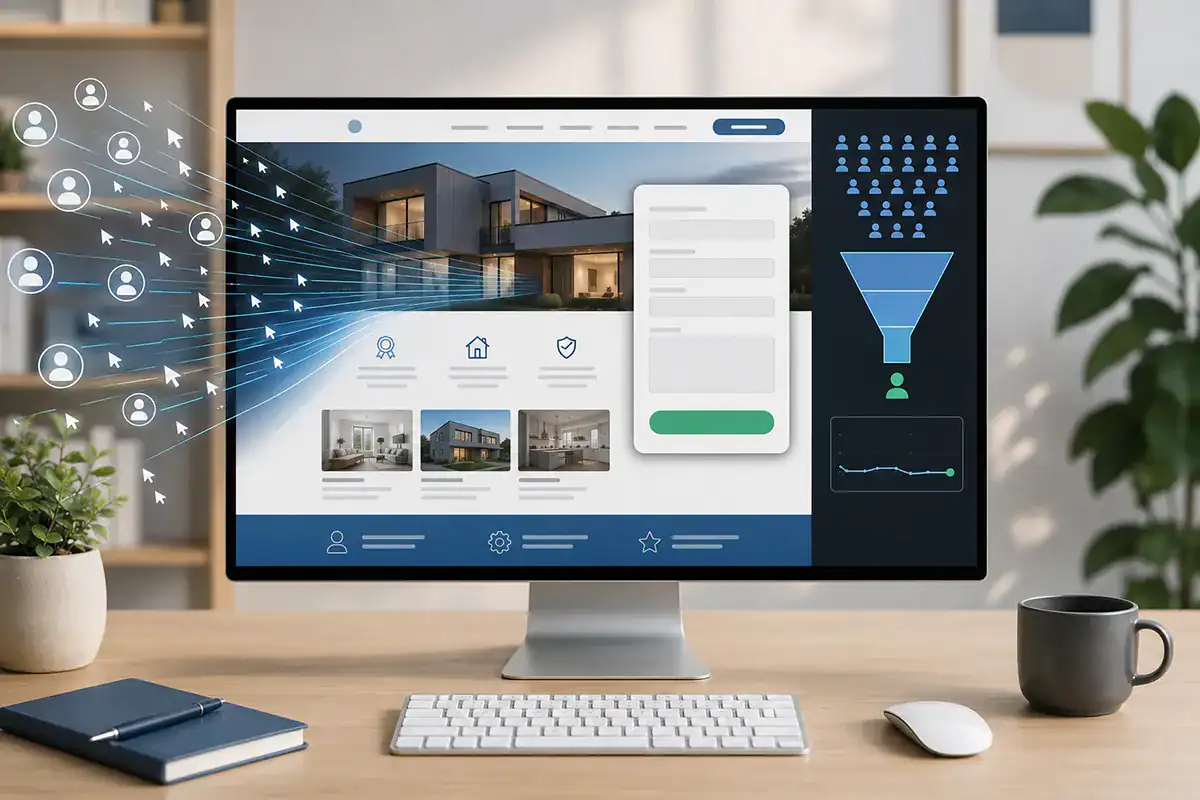
Many small business owners assume that if they can get more people to visit their website, they’ll naturally generate more customers.
But that’s only part of the equation.
If your website visitors aren’t becoming customers, the problem may not be the amount of traffic you’re getting. It may be what those visitors experience once they arrive.
The good news is that increasing website conversions doesn’t always require a complete redesign. Small improvements that build trust, answer questions, and guide visitors toward the next step can often make a meaningful difference.
In this article, we’ll examine some of the most common reasons website visitors don’t become customers—and what you can do to create a clearer, more helpful experience after they arrive.
1. Visitors Don’t Trust Your Business Yet
When someone visits your website for the first time, they begin evaluating your business almost immediately. Within a few seconds, they may be asking themselves:
- Is this a legitimate business?
- Do they have experience?
- Can I trust them?
- Are they the right fit for my needs?
If your website doesn’t answer those questions quickly, visitors may leave before exploring the rest of your site.
Fortunately, building trust doesn’t require flashy design or complicated features. Often, it’s the small details that give visitors confidence, such as:
- Client reviews and testimonials
- Professional photos of your team or completed work
- A clear explanation of your services
- An informative About page
- Examples of past projects or case studies
- Easy-to-find contact information
These trust signals reassure visitors that your business is established, professional, and capable of delivering what they need.
Think about your own online behavior. Before hiring a contractor, scheduling an appointment, or requesting a quote, you probably look for reviews, examples of previous work, and information about the company. Your prospective customers are doing the same thing.
The faster your website builds trust, the more likely visitors are to stay, explore your services, and take the next step.
2. Your Message Isn’t Clear
A visitor shouldn’t have to guess what your business does or who your services are for. If your homepage or service pages are vague, cluttered, or filled with industry jargon, potential customers may leave because they can’t quickly determine whether you’re the right fit.
Within the first few seconds of visiting your website, people should be able to answer three simple questions:
- What do you do?
- Who do you help?
- Why should I choose your business?
If those answers aren’t immediately clear, visitors are likely to continue their search elsewhere.
Clear messaging isn’t about using clever slogans or complicated marketing language. It’s about communicating your value in a way that is easy to understand. Focus on explaining your services, the problems you solve, and the benefits customers can expect.
For example, compare these two headlines:
“Innovative Digital Solutions for Modern Businesses”
and:
“Custom WordPress Websites Designed to Help Small Businesses Generate More Leads”
The second headline immediately tells visitors what the business offers and who it is intended to help.
Effective custom WordPress website design should support this message—not distract from it. The design, headline, supporting content, and calls-to-action should all help visitors understand that they have arrived in the right place.
3. Visitors Don’t Know What to Do Next
If your website visitors aren’t becoming customers, they may not know what to do next.
Imagine finding the service you need, only to realize you’re unsure how to get started. That is exactly how many visitors feel when they land on a website without a clear call-to-action.
Every page should guide visitors toward a logical next step, whether that means:
- Requesting a quote
- Scheduling a consultation
- Calling your office
- Filling out a contact form
- Purchasing a product
- Learning more about a specific service
Don’t assume visitors will know what to do. If there isn’t a clear button, link, or call-to-action, many people will leave rather than spend time figuring it out.
It’s also important to avoid presenting too many competing choices. If every page is filled with different buttons, pop-ups, and navigation options, people can become overwhelmed and take no action at all.
Ask yourself:
If someone lands on this page for the first time, is it obvious what I want them to do next?
If the answer is no, your website may be creating unnecessary friction in the customer journey.
A focused call-to-action makes the next step easier to understand and complete.
4. Their Questions Aren’t Being Answered
Before contacting a business, most people have questions. If your website doesn’t answer them, visitors may leave to find another company that does.
Think about the questions you regularly hear from prospective customers. Many of them can probably be answered directly on your website.
For example, visitors may want to know:
- What services do you offer?
- What areas do you serve?
- How does your process work?
- How long does a typical project take?
- What should I expect after contacting you?
- Do you have examples of your work?
Providing clear answers reduces uncertainty and gives visitors more confidence to take the next step.
A frequently asked questions section can also be a valuable addition to a service page. It improves the visitor experience, demonstrates expertise, and provides helpful content that can support your SEO strategy.
Every important unanswered question gives someone another reason to leave. The more useful and informative your website is, the easier it becomes for prospective customers to move from browsing to contacting your business.
5. You’re Attracting the Wrong Website Visitors
It’s easy to focus on how many people visit your website, but traffic alone doesn’t grow a business. If the people arriving on your site aren’t looking for the products or services you offer, they are unlikely to become customers.
Imagine that you own a local landscaping company, but many of your visitors are searching for do-it-yourself landscaping ideas. They may read your content, but they were never planning to hire a professional.
The same principle applies to nearly every business. Your website should attract people who are looking for the services you provide—not simply anyone who happens to find it.
Clearly explaining your services, targeting relevant search terms, and creating useful content for your ideal customers can all improve the quality of your traffic. A focused SEO strategy for your small business should help connect your website with people whose searches match the services you provide.
A website receiving 100 qualified visitors can be far more valuable than one receiving 1,000 visitors who were never likely to become customers.
Focusing on traffic quality—not merely traffic volume—can produce more inquiries, better leads, and a stronger return on your marketing efforts.
6. Small Website Problems Are Creating Friction
If your website visitors aren’t becoming customers, don’t immediately assume you need a complete redesign. In many cases, small and thoughtful improvements can meaningfully change how visitors interact with your website.
For example, you might:
- Add recent client reviews or testimonials.
- Rewrite your homepage to explain what you do more clearly.
- Improve your calls-to-action.
- Update outdated service information.
- Add answers to common customer questions.
- Simplify your contact form.
- Refresh older content to keep your website current.
Knowing how often to update your website content can help prevent outdated information, old testimonials, and unclear service details from weakening the visitor experience.
The key is to view your website as an ongoing business asset rather than a one-time project. Regularly reviewing your content, monitoring how visitors interact with the site, and making continuous improvements can lead to better results over time.
The businesses with the most effective websites aren’t necessarily the ones with the largest budgets. They’re often the ones that consistently look for ways to create a better experience for their customers.
Final Thoughts: Turn More Website Visitors Into Customers
Attracting people to your website is an important first step, but traffic alone doesn’t grow your business. Your website must also build trust, communicate your services clearly, answer important questions, and make the next step easy to complete.
Improving website conversions doesn’t always require starting over. Small, intentional updates can make a significant difference in how visitors interact with your website and whether they choose to contact your business.
If your website visitors aren’t becoming customers, it may be time to evaluate the experience you’re creating after they arrive.
AJT Digital Designs helps small businesses build and improve websites that do more than look professional. Our websites are designed to build trust, support long-term marketing, and encourage visitors to become customers.
Whether you need a new WordPress website, ongoing SEO services, or website maintenance and support, we can help you get more value from the traffic you’re already earning.
Frequently Asked Questions
Why are people visiting my website but not contacting me?
Visitors may leave without contacting you if they don’t trust your business, understand your services, find answers to their questions, or see a clear next step. Complicated contact forms and unclear calls-to-action can also discourage inquiries.
How can I turn more website visitors into customers?
Start by clearly explaining what you offer, adding trust signals such as reviews and project examples, answering common questions, and giving visitors one obvious action to take. Even small improvements can make your website easier to navigate and use.
Do I need more website traffic or a better conversion rate?
It depends on your current traffic and how visitors behave after arriving. If you’re attracting qualified visitors but receiving few inquiries, improving your website’s conversion experience may be more valuable than simply attracting more traffic.
Does improving website conversions require a complete redesign?
Not always. Updating your messaging, calls-to-action, testimonials, service information, FAQs, or contact forms may improve results without requiring a complete redesign. A redesign may be appropriate when the website has broader problems with usability, mobile responsiveness, speed, or outdated technology.