
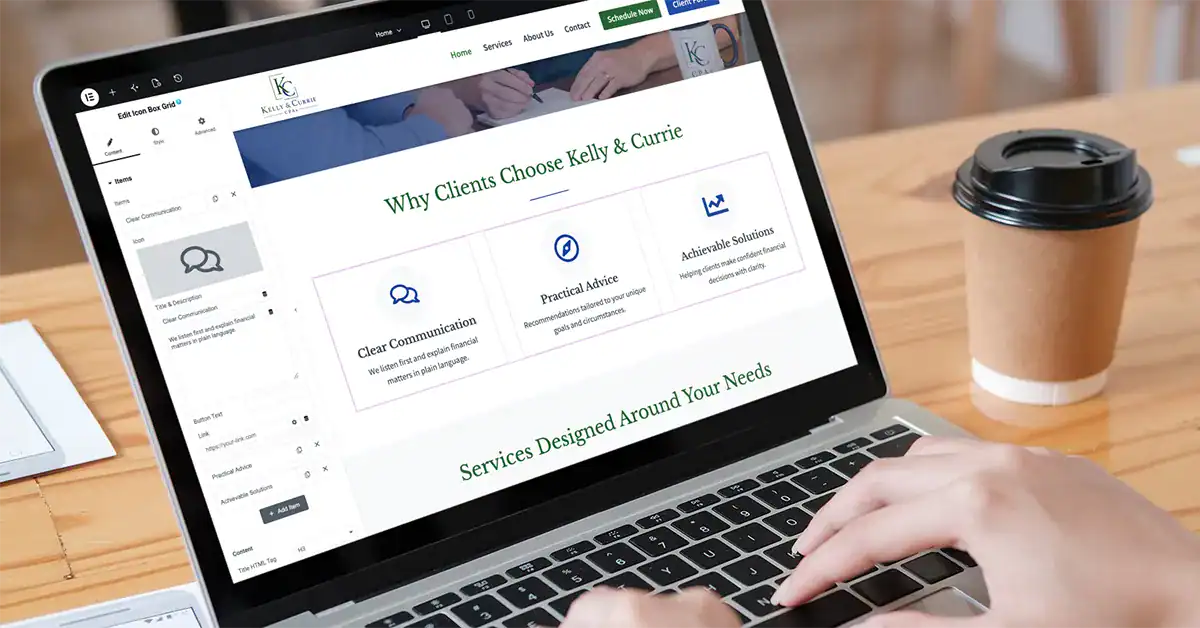
Your website isn’t something you launch once and forget. As your business evolves, your website should evolve with it. Services change, projects are completed, testimonials are earned, and information naturally becomes outdated over time.
One of the most common questions business owners ask is, “How often should I update my website content?” While there’s no one-size-fits-all answer, regularly reviewing and updating your website helps ensure visitors always find accurate information, builds trust in your business, and supports your long-term SEO efforts.
The good news is that keeping your website current doesn’t mean redesigning it every year or publishing a new blog post every week. Small, consistent updates can make a significant difference. Understanding what to update, and when, can help ensure your website remains accurate, relevant, and continues supporting your business for years to come. Developing a simple approach to website content maintenance makes those updates much easier to manage over time.
Why Updating Website Content Matters
Your website is often the first impression potential customers have of your business. If the information they find is outdated, inaccurate, or no longer reflects what you offer, it can quickly reduce their confidence and send them looking elsewhere. One of the easiest ways to keep website content fresh is by regularly reviewing the pages your customers visit most.
Regular website content updates provide several important benefits:
- Create a better user experience. Visitors can quickly find accurate information about your services, business hours, contact details, and other important information.
- Build trust and credibility. An up-to-date website shows that your business is active and paying attention to the details.
- Support your SEO efforts. Search engines favor websites that are regularly maintained and provide relevant, current information. While updating content alone won’t guarantee higher rankings, regular SEO content updates support your long-term search visibility and help ensure your website continues providing value to visitors.
- Improve conversion opportunities. Updated service pages, recent testimonials, and current project examples help visitors feel more confident about contacting your business.
- Reflect your business today. Your business changes over time. Your website should accurately represent the services you offer, the markets you serve, and the experience you’ve gained.
The goal isn’t to constantly rewrite every page on your website. Instead, focus on making small, meaningful updates that ensure your content continues to answer your customers’ questions, accurately represent your business, and support your long-term business goals.
How Often Should Different Parts of Your Website Be Updated?
Not every page on your website needs the same level of attention. Some information changes frequently, while other content may remain relevant for years. The key is to review your website regularly and update content whenever your business, services, or customers’ needs change.
| Website Content | Recommended Review Schedule |
|---|---|
| Homepage | Every 3–6 months |
| Service Pages | Every 3–6 months |
| About Page | At least annually or whenever your business changes |
| Contact Information | Immediately when changes occur |
| Blog Articles | Review every 6–12 months; publish new content as needed |
| Portfolio or Recent Projects | Add new work as it’s completed |
| Testimonials | Quarterly or whenever new reviews are received |
| FAQs | Every 6–12 months |
These recommendations aren’t strict rules—they’re a starting point. Some businesses, such as retail stores or event organizations, may need to update content weekly, while others may only need to review key pages a few times each year.
Instead of asking, “When was the last time I updated my website?” ask yourself, “Does my website accurately represent my business today?” If the answer is no, it’s probably time for a content refresh.
Signs Your Website Content Is Outdated
Even if your website is functioning properly, the content may no longer reflect your business. A quick review can often reveal opportunities to improve accuracy, build trust, and provide a better experience for your visitors.
It may be time for a content refresh if you notice any of the following:
- Your services have changed, but your website still describes what you offered years ago.
- Team members have joined or left, but your About page hasn’t been updated.
- Your contact information, business hours, or location is no longer accurate.
- Recent projects or completed work aren’t showcased on your website.
- Testimonials and reviews haven’t been updated in a long time.
- Old promotions, events, or announcements are still visible.
- Blog articles contain outdated information or no longer reflect current best practices.
- Broken links or missing images create a poor user experience.
- Your website still references an old copyright year or outdated business information.
- Your competitors offer more complete or up-to-date information than your website.
You don’t need to redesign your entire website every time something changes. Often, updating a few key pages is enough to ensure your website accurately represents your business and gives potential customers confidence that they’re viewing current, reliable information.
Content Updates vs. Website Maintenance
Many business owners assume that updating their website content and maintaining their website are the same thing. While they’re closely related, they serve different purposes. A healthy website requires both.
| Content Updates | Website Maintenance |
|---|---|
| Updating service pages | Installing WordPress updates |
| Refreshing homepage messaging | Updating plugins and themes |
| Adding new testimonials | Monitoring website security |
| Publishing blog articles | Creating and testing backups |
| Updating photos and project galleries | Checking website uptime and performance |
| Revising contact information | Fixing technical issues and errors |
Content updates focus on what your visitors see and read. Website content maintenance includes updating service pages, refreshing testimonials, adding new projects, revising contact information, and ensuring every page accurately reflects your business today.
Website maintenance focuses on the technical health of your website. It helps keep your site secure, reliable, and functioning properly behind the scenes.
Both are important, but neither replaces the other. You can have a technically healthy website with outdated content, or you can have fresh content on a website that’s running outdated software. The best-performing websites combine both regular content updates and ongoing technical maintenance to provide a great experience for visitors while supporting long-term business goals.
Content updates and website maintenance also support your SEO efforts. Fresh, accurate content helps search engines understand that your website remains relevant, while ongoing maintenance ensures visitors can access your site quickly and reliably. Together, SEO content updates, technical maintenance, and high-quality content create a stronger foundation for long-term search visibility.
A Simple Website Content Review Schedule
Keeping your website content current doesn’t have to take hours each week. Whether you’re managing your own website or working with a professional who provides small business website maintenance, setting aside a little time throughout the year can help ensure your website continues to accurately represent your business and provide visitors with the information they’re looking for.
Monthly
Take 15–30 minutes to review the basics:
- Verify your contact information is correct.
- Test your contact forms.
- Check for broken links or missing images.
- Add any new testimonials you’ve received.
- Publish new content if you have company news, events, or helpful resources to share.
Quarterly
Perform a more thorough review of your website:
- Update your homepage if your messaging or promotions have changed.
- Review service pages to ensure they’re accurate and complete.
- Add recent projects or portfolio examples.
- Refresh outdated photos where appropriate.
- Review key pages for opportunities to improve clarity and SEO.
- Review your FAQs to ensure they’re still answering common customer questions.
Annually
Once a year, step back and evaluate your website as a whole:
- Review every page for outdated information.
- Update your About page with any team or business changes.
- Remove content that is no longer relevant.
- Refresh older blog articles with current information.
- Consider whether your website still reflects your business goals and brand.
Regular content reviews don’t have to be overwhelming. By making small updates throughout the year, you can avoid the need for a major website overhaul while ensuring your content remains accurate, helpful, and relevant.
Keep Your Content Current Without a Redesign
Your website is one of your business’s most valuable marketing tools. Like any important business asset, it performs best when it’s reviewed, updated, and improved on a regular basis.
The good news is that keeping your website content current doesn’t require constant updates or major redesigns. A simple review schedule and a commitment to making small, consistent improvements can go a long way toward building trust, improving your search visibility, and ensuring you keep website content fresh as your business continues to evolve.
If you don’t have the time or resources to regularly review and update your website, you’re not alone. Many business owners prefer to focus on running their business while partnering with a trusted designer to keep their website accurate, secure, and performing at its best.
At AJT Digital Designs, we help businesses keep their websites current through ongoing Website Maintenance & Support services. From technical updates and performance monitoring to content changes and SEO improvements, we’re here to help ensure your website continues working for your business long after it goes live.
Frequently Asked Questions
How often should you update your website content?
Most business websites should be reviewed at least once every three to six months. However, some content—such as contact information, business hours, promotions, and service offerings—should be updated as soon as changes occur. Regular reviews help ensure your website remains accurate, relevant, and useful to visitors.
What website content should I update regularly?
Focus on the pages your customers use most, including your homepage, service pages, About page, contact information, testimonials, FAQs, and portfolio or recent projects. Blog articles should also be reviewed periodically to ensure they remain accurate and up to date.
Does updating website content improve SEO?
Yes. Regular content updates help search engines understand that your website is active and relevant. While updating content alone won’t guarantee higher rankings, keeping information accurate and refreshing older pages supports your long-term SEO strategy and provides a better experience for visitors.
How do website content updates differ from website maintenance?
Website content updates focus on the information visitors see, such as service pages, blog articles, images, and testimonials. Website maintenance focuses on the technical side of your website, including software updates, security monitoring, backups, and performance. Both are essential to keeping your website effective.
Do I need to publish new blog posts every month?
Not necessarily. Publishing helpful new content is beneficial, but keeping your existing pages accurate and up to date is just as important. Regularly reviewing and improving your current content can provide significant value for both your visitors and your long-term SEO efforts.
Can I update my website content myself?
Yes. Many business owners handle routine content updates themselves, especially for things like adding testimonials, updating business information, or publishing blog posts. Others prefer to work with a website maintenance partner who can help manage content updates, technical maintenance, and ongoing improvements while they focus on running their business.